
Speaking and Workshops
Practical animal welfare insight for conferences, teams and sector events.
I speak about what it takes to move welfare from principle into everyday practice.
My sessions focus on the real-world side of welfare: how standards are understood and applied, how behaviour and enrichment work can be evaluated meaningfully, how culture and confidence shape welfare decisions, and why good intentions do not automatically reach animals.
They draw on 25 years’ experience across zoological collections, rescue, assistance-animal settings and international consultancy.
The questions I bring into the room
My talks and workshops are shaped by practical welfare work in real animal-care settings: building behaviour and husbandry programmes, supporting teams to change long-standing routines, working within different levels of resource, and asking what animals are experiencing when policies, facilities and daily systems meet.
The useful question is rarely only what good welfare should look like. It is what needs to be in place for welfare to happen here, with these animals, this team, these resources and this pressure.
How are welfare standards, policies or programme goals interpreted by the people expected to use them?
What inherited routines, workarounds or assumptions are shaping animals’ daily experience?
Do teams have the confidence, time, resources and support to act on those expectations consistently?
Are behaviour, enrichment, cooperative care and observation built into welfare delivery and reviewed over time, or treated as optional extras?
Are decision-makers seeing both the welfare case and the operational case for change?
Are good intentions reliably changing what animals experience day to day?
These questions sit at the centre of my talks, workshops and sector discussions.
Selected presentations
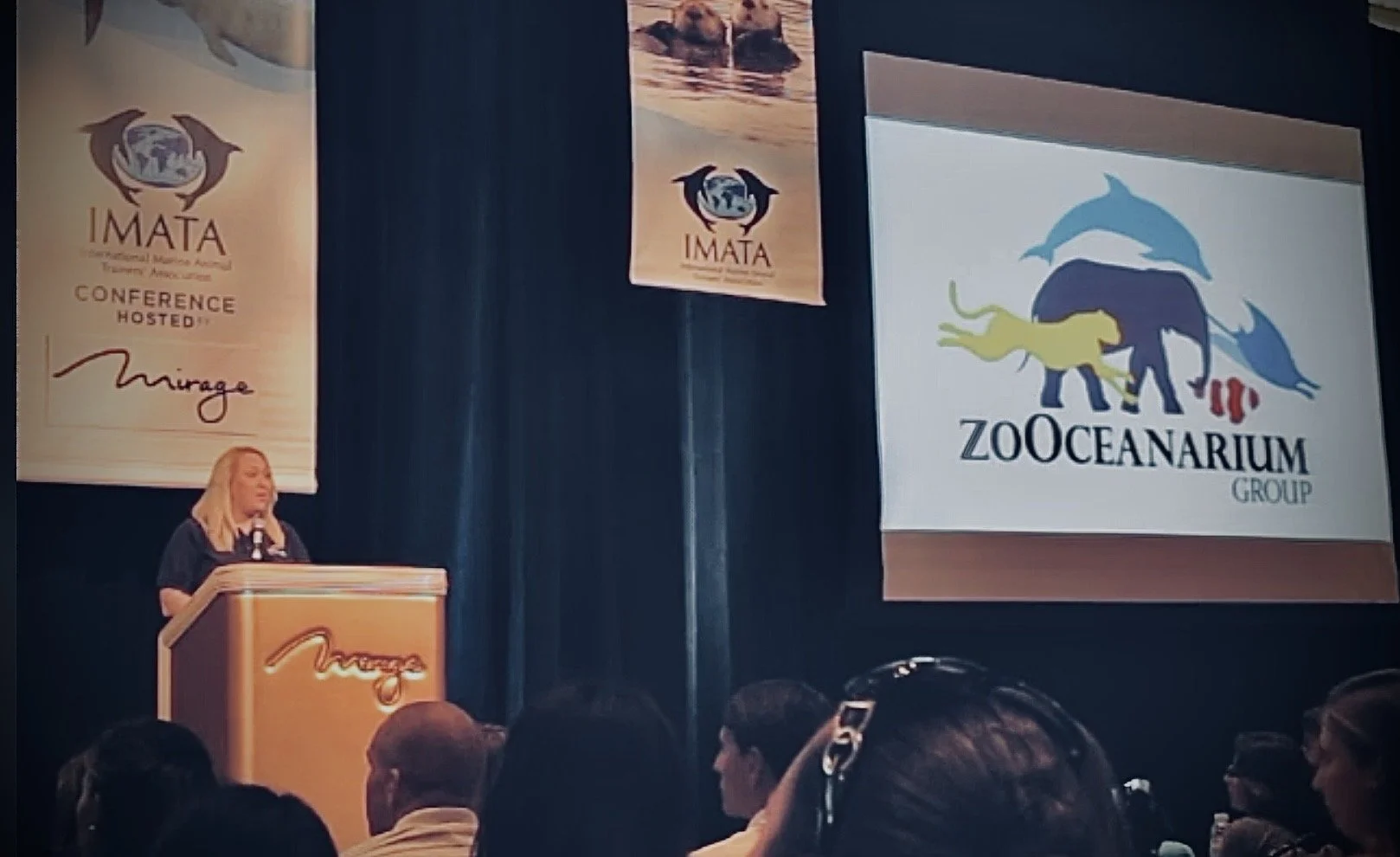
International Marine Animal Trainers’ Association Annual Conference
Award-recognised presentation | Las Vegas | 2013
Don’t Judge a Penguin by Its Ability to Climb a Tree
An international conference presentation exploring penguin welfare, behavioural management, cooperative husbandry and the practical role of training in good animal care.
The presentation examined how structured behavioural management could support routine care, cooperative medical husbandry, enrichment, education and conservation awareness.
Although centred on penguins, its wider message was not species-specific: effective behavioural management depends on understanding the species, the individual animals, their environment and the capabilities of the team delivering their care.
The presentation reflects the terminology and public-engagement context of the sector in 2013.
Animal Training Academy | Webinar | 2023
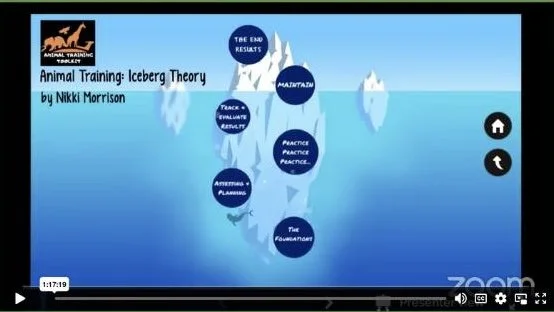
Animal Training Iceberg Theory
Interactive session exploring the welfare, behavioural and operational factors beneath trained behaviour, including animal needs, environment, resources, team capability, planning and evaluation.
Selected podcast appearance
Animal Training Academy Podcast | Episodes 197-188 | 2022
Nikki Morrison; Animal Training Toolkit
A two-part guest conversation with Animal Training Academy exploring animal training, behaviour, welfare, team systems and the practical realities of implementing animal-centred programmes across different species, facilities and resource levels.
The discussion reflects themes that now sit at the centre of Welfare in Practice, including inherited routines, stakeholder buy-in, operational constraints, team communication, behaviour-informed care and the importance of understanding the setting before recommending change.
Talk and workshop themes
Tailored sessions aligned with current priorities
Talks, workshops and discussion sessions can be shaped around what your organisation, event or audience is currently trying to address.
Welfare in practice, not just in principle
What happens after welfare is written down, and how well those principles hold up when they meet daily routines, team capacity and operational pressure.
When care is not enough: culture, confidence and accountability
Why care and good intentions cannot carry welfare improvement on their own if the systems around people make good practice difficult to sustain.
When knowledge or skill is not the problem
How to identify whether a welfare implementation challenge reflects a knowledge or skill gap, or whether something else is getting in the way.
Behaviour as welfare infrastructure
How to move beyond doing more training or enrichment and ask whether those practices are making a meaningful difference to welfare, how consistently they are delivered and what happens next.
Operational empathy without lowering standards
Why constraints must be understood without becoming excuses, and why resource limits, team pressure and facility realities need to be taken seriously if higher welfare standards are going to work in practice.
Cross-sector lessons in welfare implementation
What zoological, rescue, assistance-animal, companion, farm and international welfare contexts can learn from one another about where welfare improvement succeeds, stalls or gets lost.
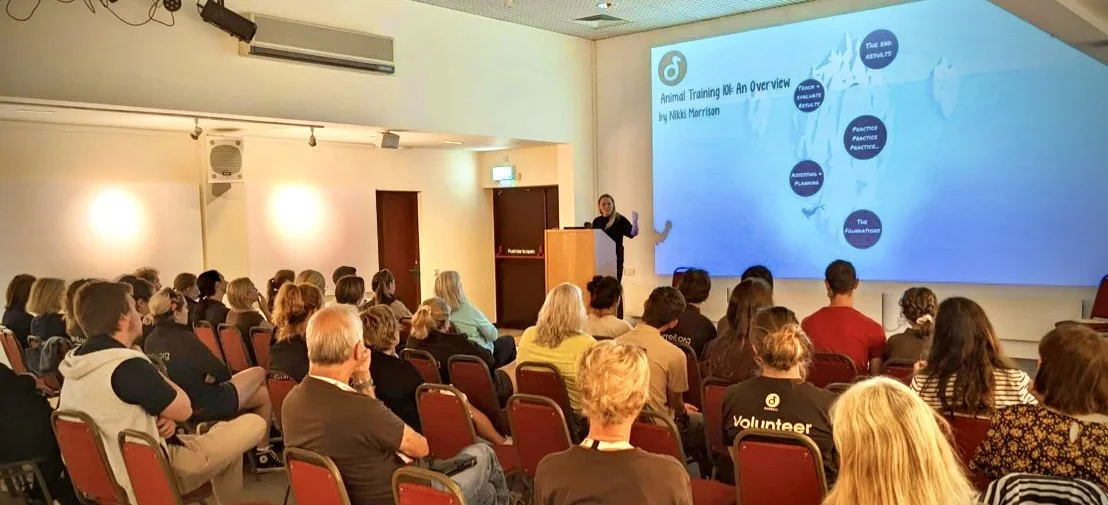
Presenting to delegates from local authorities, veterinary teams, animal-care teams and volunteers at Durrell’s Jersey Zoo.
Photo credit: Graeme Dick
Attending sector events and engaging with the wider welfare landscape helps me stay connected to current welfare science, emerging questions and professional debate.
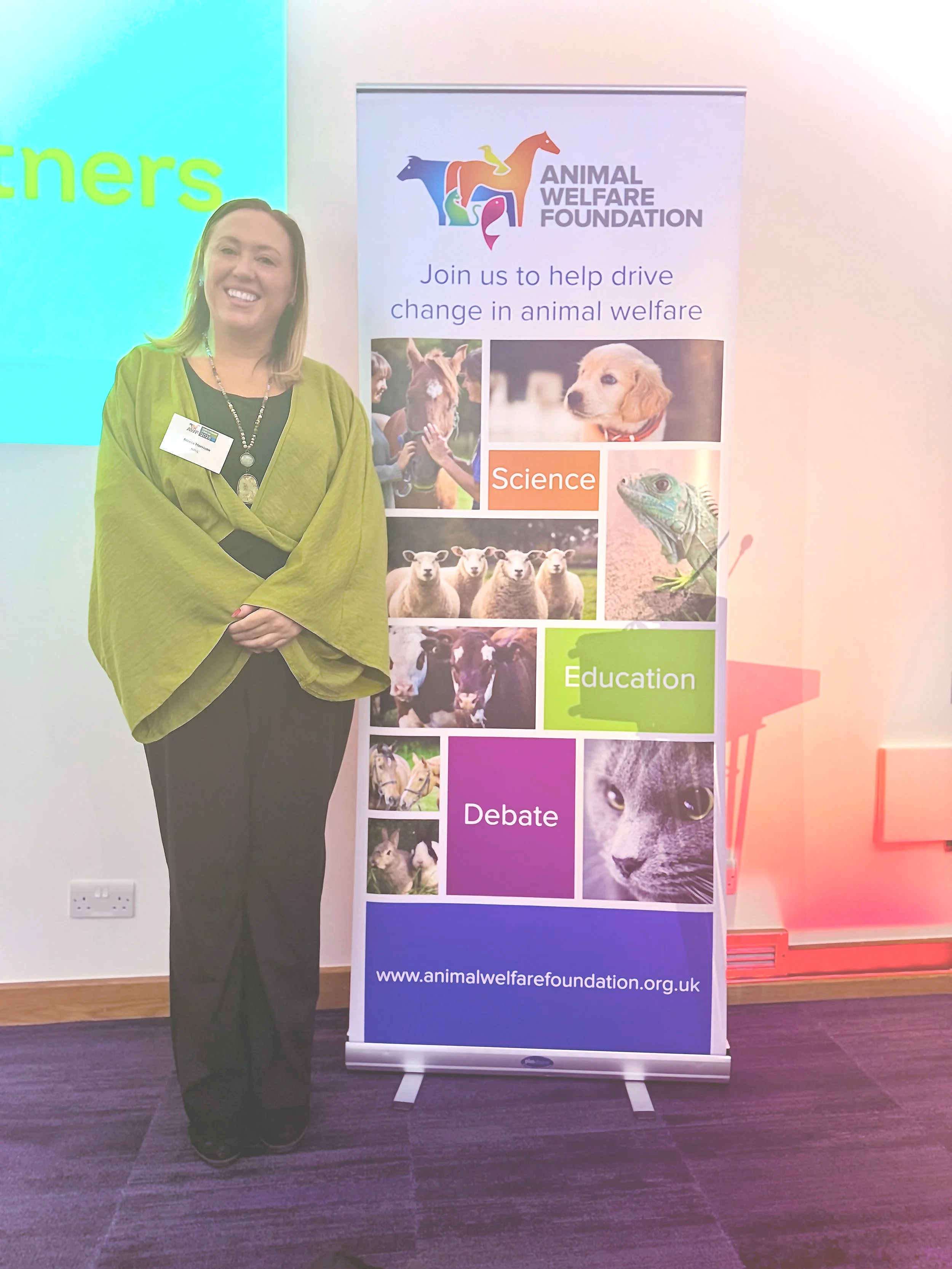
Animal Welfare Foundation Discussion Forum
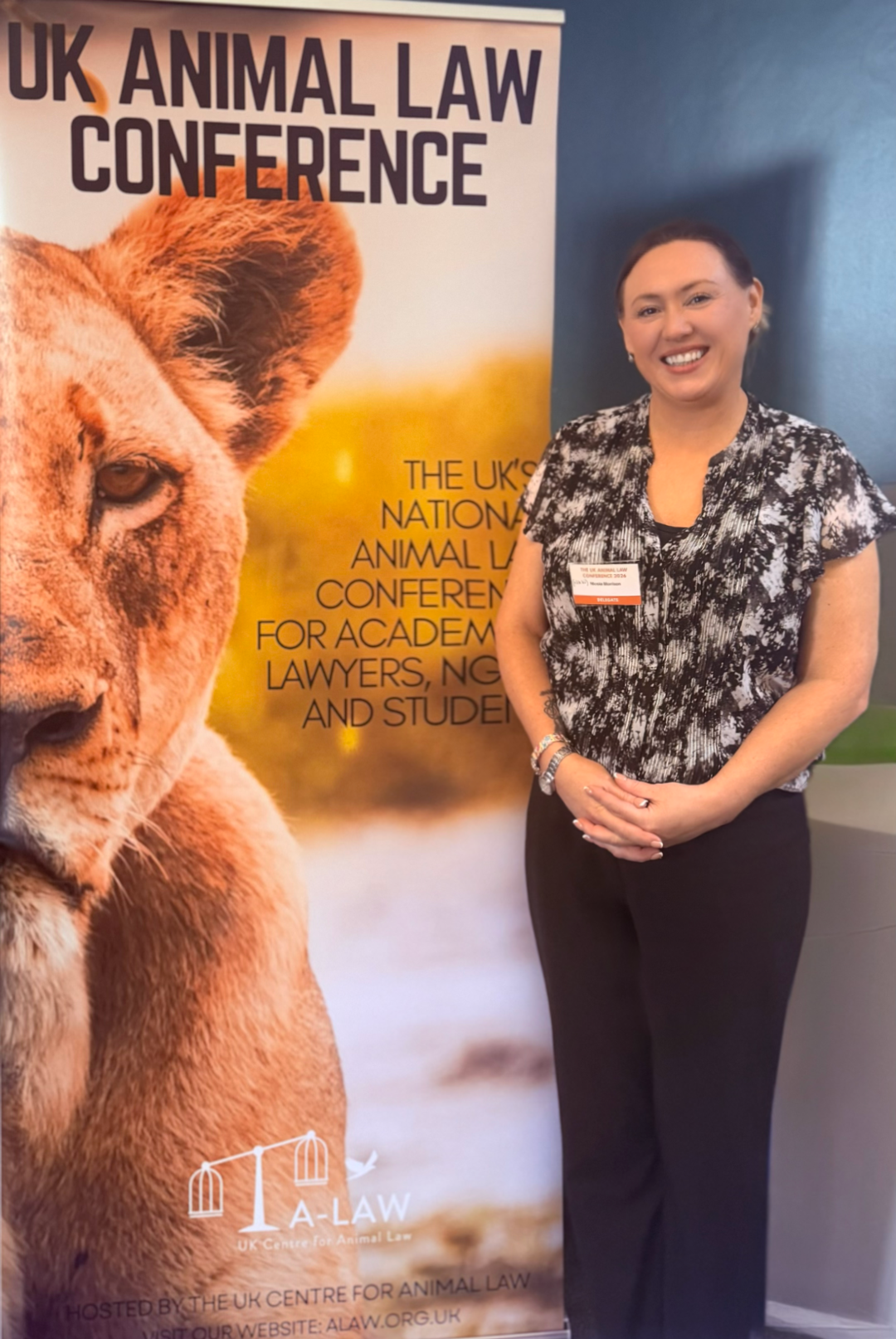
6th UK Animal Law Conference 2026: The Future of Animal Law
Formats
Keynotes, panel discussions, workshops, team sessions, facilitated discussions, conference sessions, webinars and podcast interviews.
Sessions can range from practical team-facing workshops to wider sector conversations, shaped around the audience, purpose and level of depth needed.
6th UK Animal Law Conference 2026: The Future of Animal Law - Attendee engagement session
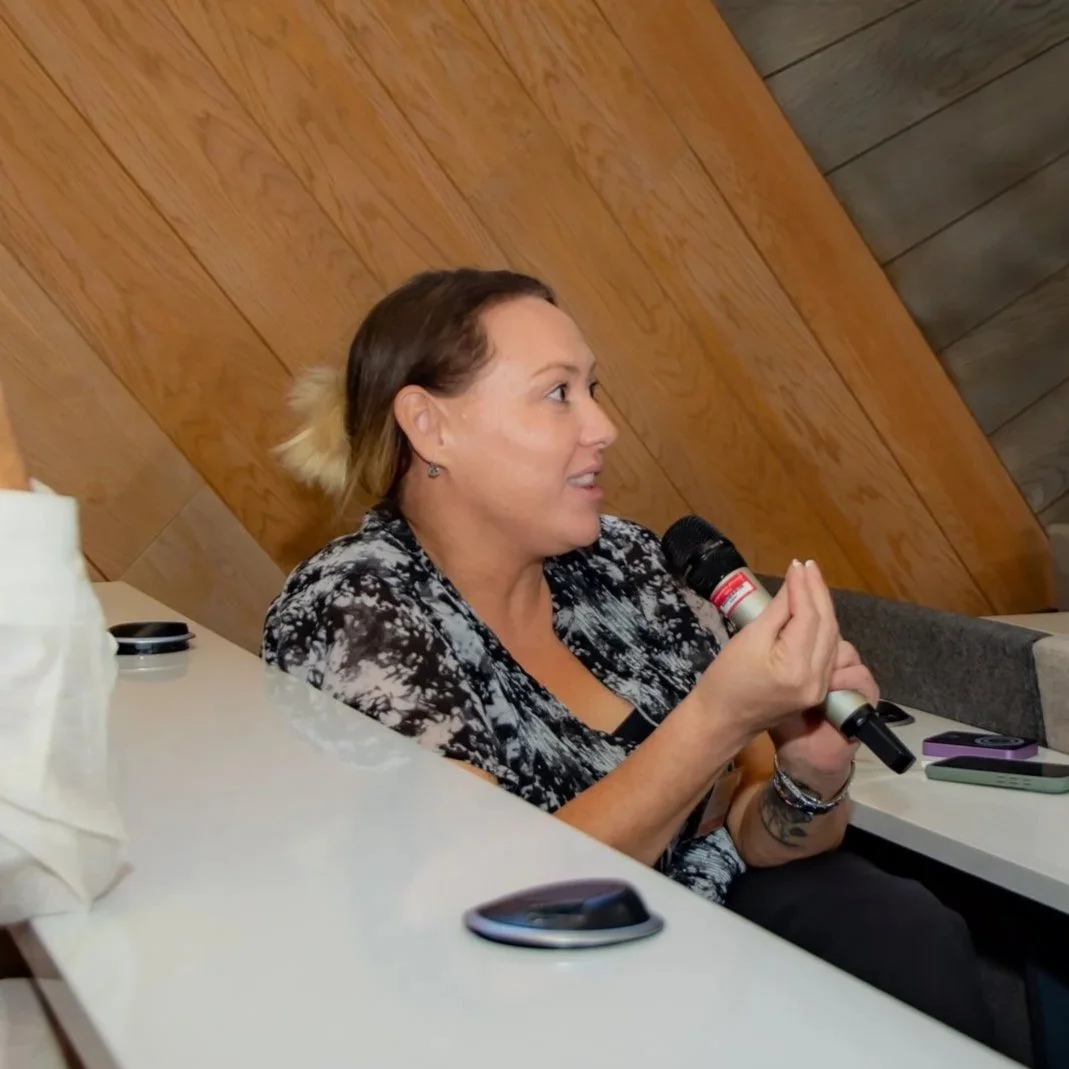
Photo credit: Craig O’Donnell
For conferences, teams and sector audiences
Relevant for conferences, sector bodies, professional networks, universities, zoological collections and aquariums, rescue and rehoming organisations, NGOs, charities, animal-care teams, and policy, regulatory or assurance audiences.
“Her public presentations were lively, motivating, informative and entertaining, and consistently well received by audiences.”
Dr Katherine Whitehouse-Tedd
Independent Consultant and Researcher | Senior Visiting Fellow | Nottingham Trent University | Former Programmes Manager | Combe Martin Wildlife Park
What I bring
My work sits at the intersection of welfare science, behaviour, standards, systems and daily operational reality. Drawing on hands-on animal-care, behaviour and operational leadership experience, I use practical examples from operational settings alongside wider welfare and implementation frameworks to show where these connect, where they fail to connect and what that means for animals’ lived experience.
I do not talk about welfare as an abstract ideal. I talk about it as something shaped by people, resources, routines, decisions and context. Earlier training in theatre and performance also helps me communicate complex material clearly and confidently, with the audience in mind. My aim is for audiences to leave with clearer language, sharper questions and a more practical understanding of how welfare science, standards and good intentions translate into real-world improvement.
Speaker information and organiser resources are available for event organisers, programme teams, producers and media contacts, including the current Speaker Information Pack, approved biographies, publicity headshots and Welfare in Practice brand assets.
For keynotes, panels, workshops, training or other speaking enquiries, please get in touch with a little context about the event, audience and theme.
For keynotes, panels, workshops, training or other speaking enquiries, please get in touch with a little context about the event, audience and theme.