
Articles and Insights
Practical thinking on animal welfare implementation
For people working to make welfare happen in practice
Articles, reflections, frameworks and sector-facing notes on the practical work of animal welfare: how evidence, standards, policy, professional judgement and organisational systems shape what happens in day-to-day care.
The focus here is not only on what good welfare should look like, but on what has to happen for it to become workable and consistent in real settings, and how we assess whether it is making a difference.
Standards, science and policy all matter. But the practical test is what happens next: how they are interpreted, resourced and applied in real settings, with real animals, real people and real constraints.
I am building this page deliberately, with quality over volume. Join the list below to hear when new work is published.
Current areas of focus and interest
Welfare implementation
How welfare principles, policies and standards move from written intention into daily practice in ways that can be understood, applied, sustained and evidenced.
Standards, assurance and enforcement
How welfare expectations are interpreted, implemented, evidenced and inspected, and what helps stronger standards become meaningful in real-life contexts.
Behaviour-informed practice
How behavioural knowledge can inform welfare decisions, help indicate what animals may be experiencing and guide priorities in everyday care.
Culture, confidence and accountability
How team confidence, leadership, resources, communication and follow-up influence whether good welfare practice becomes consistent.

Cross-sector learning
What zoological, rescue, assistance-animal, companion-animal and farm welfare settings can teach one another about why improvement takes hold in one context and falters in another.
Practical improvement
Reflections, frameworks and examples for people trying to turn good intentions into clearer decisions, better systems and more usable welfare practice.
Latest Articles & Insights
New Welfare in Practice writing on how animal welfare principles, evidence and good intentions translate into real-world settings.
Why Welfare in Practice exists
Welfare in Practice explores what happens between animal welfare knowledge and animals’ day-to-day experience, from everyday care to the organisational decisions and systems that shape whether good intentions make a sustained difference.
Long-form articles
Longer pieces exploring animal welfare issues in depth, with a focus on implementation, decision-making and what animals experience in practice.
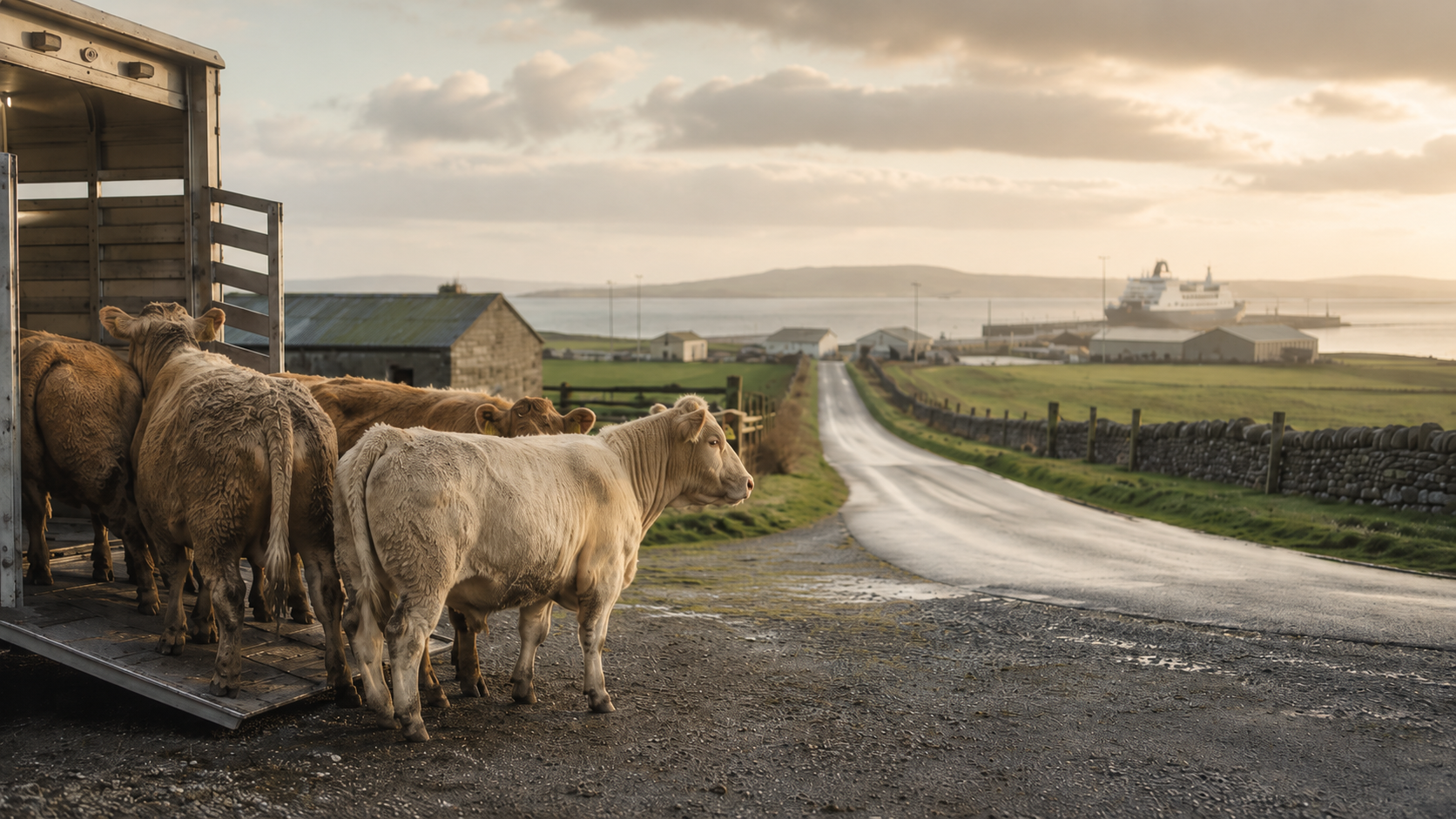
The journey is the welfare environment: what live export still teaches us about animal welfare in practice
A Welfare in Practice article exploring live export not only as a question of what should be banned, but as a wider implementation issue: what has to change so welfare protections meaningfully alter what animals experience throughout transport, handling and decision-making.
External publications
Selected guest articles and sector-facing writing published beyond Welfare in Practice.
Reading the Routine: Questions that changed how I work
Published by Wild Welfare, this guest article explores how small, careful questions about daily routines, behaviour and moments of care can change how we understand animals’ lived experience.
It reflects a central Welfare in Practice theme: meaningful welfare improvement often begins not with doing more, but with noticing differently, asking better questions and making realistic changes that can hold in daily care.

Have a topic or practical question you'd like to see explored?
If there is a theme, pattern or practical question you think belongs in this space, you are welcome to suggest it through the contact form. Please do not include confidential organisational information, identifiable animal cases or sensitive personal details.
Across the welfare landscape
Animal welfare is not a single intervention delivered by a single profession: it is shaped by connected responsibilities. Science and evidence help us understand animals and their needs. Law, policy and standards establish protections and expectations. Specialist disciplines contribute different forms of judgement. Organisations establish systems, allocate resources and make decisions that shape care. Practitioners turn all of that into what happens each day, while monitoring, assurance and frontline experience help show what is working and what needs to change.
I deliberately learn from and contribute to different parts of that landscape because strong welfare depends not only on the quality of each part but also on how well knowledge, responsibility, authority, resources and feedback move between them. What is learned in practice also has to find its way back into how guidance, standards and policy develop.
Much of my work focuses on those connections: understanding where implementation is being supported or blocked, clarifying the relationship between different forms of expertise and organisational responsibility, and helping to turn welfare expectations into workable practice and useful learning. The animal’s experience remains the point of accountability.
The organisations, communities and resources below are deliberately selective rather than comprehensive. Some have directly shaped my professional development; others represent parts of the wider welfare landscape worth understanding and exploring.
Inclusion here does not imply current affiliation or endorsement.
Science, evidence and professional judgement
Science for Animal Welfare (formerly UFAW)
Science for Animal Welfare has supported research, education and knowledge exchange for a century, and helped establish welfare as a scientific discipline in its own right. Its work shaped my evidence-led approach, and in particular my interest in what happens to welfare knowledge after it is published.
Animal Welfare Foundation (AWF)
AWF brings veterinary expertise together with welfare science and the realities faced by those responsible for animals day to day. Difficult welfare questions rarely sit with one profession, and AWF treats that as the starting point rather than a complication.
InterBeing by Sabrina Brando | AnimalConcepts
AnimalConcepts has shaped my thinking for many years, and Sabrina Brando is one of several mentors who pushed me to look beyond techniques to the people, culture and conditions around animals in human care. InterBeing on Skool is its global learning community for animal, human and planetary well-being, combining shared learning, practical resources and the InterBeing podcast.
Law, policy and standards
All-Party Parliamentary Group for Animal Welfare (APGAW)
APGAW is a cross-party group of MPs and Peers that brings animal welfare into parliamentary and policy discussion, drawing on evidence from across the sector, from welfare scientists and veterinary bodies to the organisations caring for animals day to day. Sharing implementation analysis with APGAW in relation to its work on the 2027 Standards of Modern Zoo Practice for Great Britain reinforced for me how important it is to consider delivery while policy is still being shaped: what stakeholders and their teams will realistically need to interpret, evidence and sustain in practice.
A-LAW | UK Centre for Animal Law
A-LAW brings legal thinking into animal welfare through education, discussion and policy engagement, and that perspective matters: welfare protection ultimately rests on what the law expects and enables. My own work is the complement, understanding how legal expectations operate within real organisations, because the exchange runs both ways. Legal thinking sharpens implementation, and implementation experience shows where the law will land well or struggle in practice, and whether its protections are genuinely experienced by the animals.
Organisations, systems and assurance
Royal Society for the Prevention of Cruelty to Animals (RSPCA) and RSPCA Assured
The RSPCA works across direct animal care and rehabilitation, welfare science, education, policy and legislative change, and efforts to improve the industries and systems that affect animals. RSPCA Assured is the sharpest illustration of the implementation challenge, taking farmed-animal welfare standards into assessment and assurance across farms and supply chains, where the test is always whether written standards hold up as consistent, verifiable practice.
Association of Dogs and Cats Homes (ADCH)
ADCH brings rescue and rehoming organisations together around welfare standards, operational practice and shared learning, with membership assessed against its Minimum Welfare and Operational Standards. Those standards are written to be proportionate and realistically achievable, and issued with guidance to help organisations interpret them. That is implementation thinking built in at the design stage.
British and Irish Association of Zoos and Aquariums (BIAZA)
BIAZA has been part of my professional landscape for many years through conferences, workshops and working-group involvement, including co-chairing the Carnivore Sub-Group of its Mammal Working Group. Collective work of that kind is where sector expectations meet daily practice, and where I have seen most clearly how welfare thinking either takes hold across organisations or stalls.
European Association of Zoos and Aquaria (EAZA) and EAZA Academy
EAZA is a professional reference point across the European zoo and aquarium community, from animal welfare and sector standards to professional development. Its Academy has been part of my own continuing professional development.
Practice, behaviour and training
Animal Behavior Management Alliance (ABMA)
The ABMA connects professionals specialising in behaviour management, training, enrichment and animal care. I previously served as a regional advocate for Europe. Its practical approach across a wide range of species reinforced my belief that behaviour management works best when integrated within a broader programme of welfare and care, rather than treated as a separate training activity.
Animal Training Academy (ATA)
I have contributed to Animal Training Academy through a webinar and media content, and have taken part in many collaborative forum discussions. Its community connects practical animal training with behaviour and welfare learning, and the standard of its continuing professional development content is consistently high.
ZooSpensefull
I have known Peter Giljam for many years and our conversations have shaped a good deal of my thinking. What I value in his work is that he connects individual behavioural intervention to the wider conditions that make practice effective: team communication, consistency and the everyday realities of animal care.
International Marine Animal Trainers’ Association (IMATA)
IMATA has been part of my professional development for many years through conferences, presentations and recognition of my work. It exposed me early in my career to international perspectives on training, husbandry, welfare and professional practice, and to the value of practitioners sharing what works, what changes and what they are still learning.
Practical support and perspective
Wild Welfare
I have contributed writing to Wild Welfare, whose work focuses on improving the welfare of wild animals in human care through practical support and capacity-building. Its emphasis on turning welfare knowledge into sustainable change sits at the heart of my own approach: knowledge only changes welfare when it can be made usable in real settings.
Team Building with Bite
Team Building with BITE turns corporate team building days into practical welfare gains, with teams constructing enrichment feeders and furniture that animal care teams often lack the time or budget to produce themselves. Founded by two long-serving zoo professionals, their work now spans enrichment training, enclosure design and device building, all grounded in creating opportunities for natural, species-specific behaviour.
Peter Dickinson's Zoo News Digest
Zoo News Digest now serves as a historical archive rather than a source of current guidance, but much of it remains valuable. Peter Dickinson influenced my early career and I later collaborated with him professionally. He helped me understand the distinction between being pro-zoo and being pro-good-zoo, and the importance of recognising organisational ambition, quality and genuine effort in welfare and husbandry.