
A video of a giraffe drinking rain prompted several questions. Was it the taste, or an easier way to drink without bending down? Could he also have been enjoying the sensation of the rain itself? Knowing what other drinking opportunities he had would give us more context.
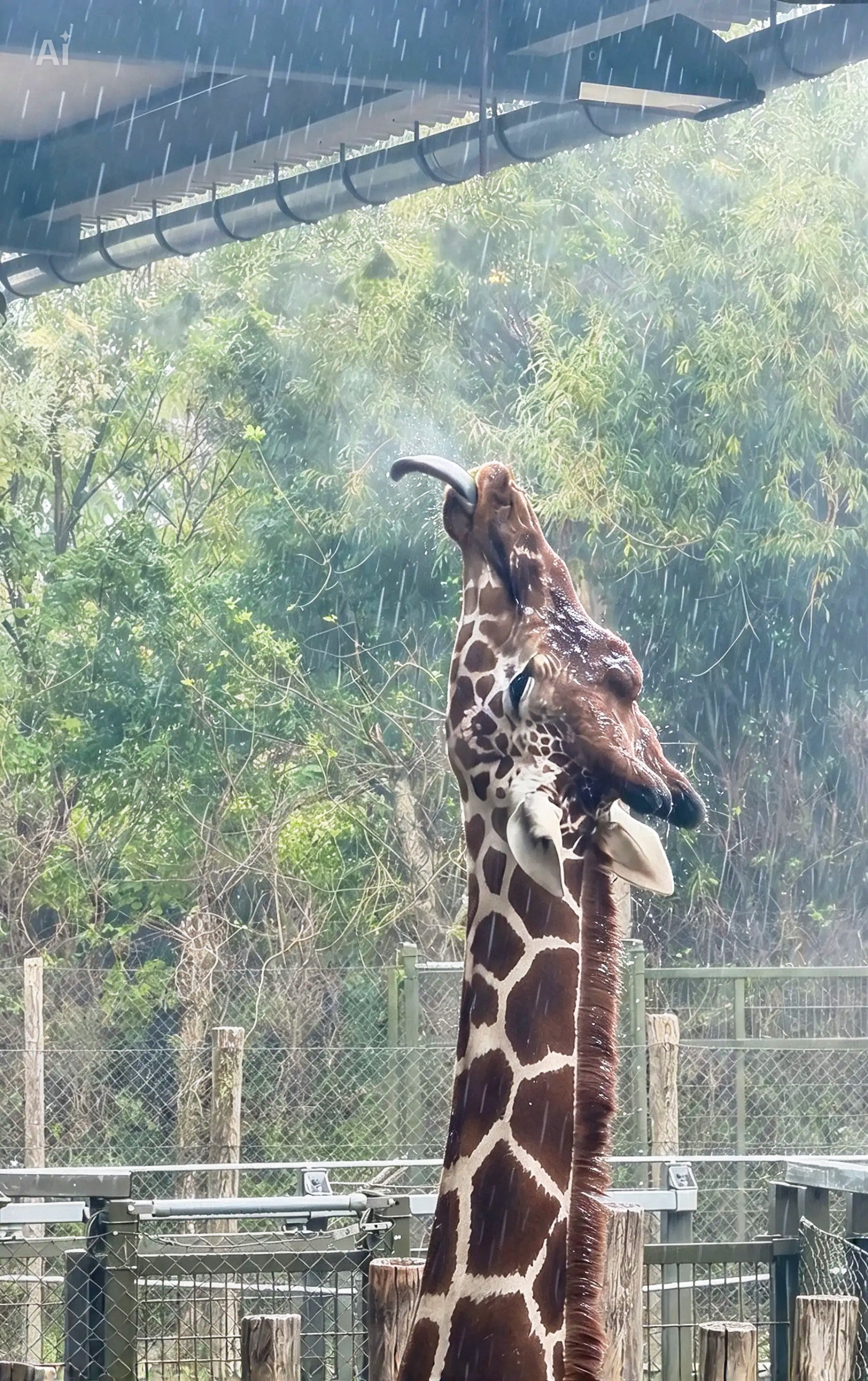
Kirstin Anderson Hansen, PhD, shared the video at Animal Care & Wellbeing: Moving to Data-Driven & Data-Informed Practices, which she hosted with Sabrina Brando, PhD, at Odense Zoo on 21–23 October 2026. For me, the workshop’s value lay in connecting practical knowledge and scientific enquiry with the people and systems that make good care possible.
Questions about how animals experience care, how we interpret behaviour and what enables teams to act have run through my work in animal care and leadership. Continuing to examine those connections with colleagues through research, practical examples and discussion remains an important part of that work.
Observing behaviour and examining explanations
Kirstin shared a giraffe example that connected everyday observation with research. The giraffes had been observed lying down elsewhere, but not outdoors during the day. Following several changes to their care, including more feeding opportunities, a keeper photographed three lying down outside. This illustrated the value of continuing to observe as care practices develop, building our understanding of the animals and how they use their environment.
Malene Friis Hansen’s quantitative sessions examined how a focused question shapes an observation plan: which animals to watch, what to record and when. Participants then tried their plans with the lions. The debrief addressed the practical demands of watching a moving group, including visibility and identifying individuals.
In Petrine Larsen’s porpoise exercise, we were asked whether the behaviour in a video appeared playful, aggressive or sexual. Participants watching the same footage interpreted it differently. The exercise highlighted why shared behavioural definitions matter: records can reflect differences in how people interpret behaviour as well as differences in the behaviour itself.
Her pilot study examined how consistently people recorded candidate behaviours, both between observers and on repeat viewing. Establishing what those behaviours indicate about welfare was a separate next step.
Cecilie Ravn Skovlund’s session on Qualitative Behaviour Assessment (QBA) explored how an animal behaves alongside what it does. Her polar bear examples illustrated differences in posture, pace, attention, and engagement within superficially similar behaviour. Her research examined how QBA scores related to other behavioural and health information.
QBA was developed by Professor Françoise Wemelsfelder and colleagues at SRUC, where I currently study Animal Welfare Science. Species knowledge and individual context remain important when interpreting these assessments.
Recording and examining practical knowledge
Sabrina asked what we know about the animals in our care that never makes it into a database. Familiar routines, individual responses and small changes often live in conversations and people’s memories. Her qualitative methods session explored approaches such as interviews, narrative accounts and structured expert discussion, offering ways to record and examine that knowledge so others can consider, discuss and question it.
When someone says an animal seems different, asking them to describe what they have seen gives us a starting point for investigation. Taking observations seriously while examining interpretations allows trust and careful enquiry to work together. Colleagues in different roles may notice different parts of the situation.
Making that knowledge available across the team supports continuity of care. A useful account records what was observed, the circumstances, how it differed from usual, and what needs follow-up.
Malene Friis Hansen’s introduction to Cultural Biology explored the routines and expectations animals and people learn through their interactions. This also has practical relevance for handovers: what has an animal learned to expect from one person, and what would be helpful for the next person caring for them to know?
Connecting assessment with care decisions
Sabrina’s 24/7 perspective widened the discussion to the animal’s whole life. The approach she developed with Professor Hannah Buchanan-Smith considers day and night, weekdays and weekends, seasons and changing needs across a lifetime. Their published framework asks how well care routines fit the biology, needs and preferences of each individual.
That includes when an animal can forage, whether it has suitable places to rest undisturbed, and whether it can choose to spend time with others or apart. Sabrina’s subsequent work with colleagues on primate care examines these opportunities in overnight and behind-the-scenes environments too. What can animals access in those spaces, what choices remain available, and how do we know whether those arrangements meet their needs? The hours when we are absent belong in welfare assessment too.
Frameworks such as the Five Domains provided a shared structure for discussing nutrition, environment, health and behavioural interactions, and what these may mean for an animal’s mental experience. Cecilie and Kirstin’s presentation on welfare assessment work for DAZA, the Danish zoo and aquarium association, included a comparison of ratings based on keepers’ accumulated knowledge with assessments supported by systematic observation. Agreement between the approaches varied across the areas assessed.
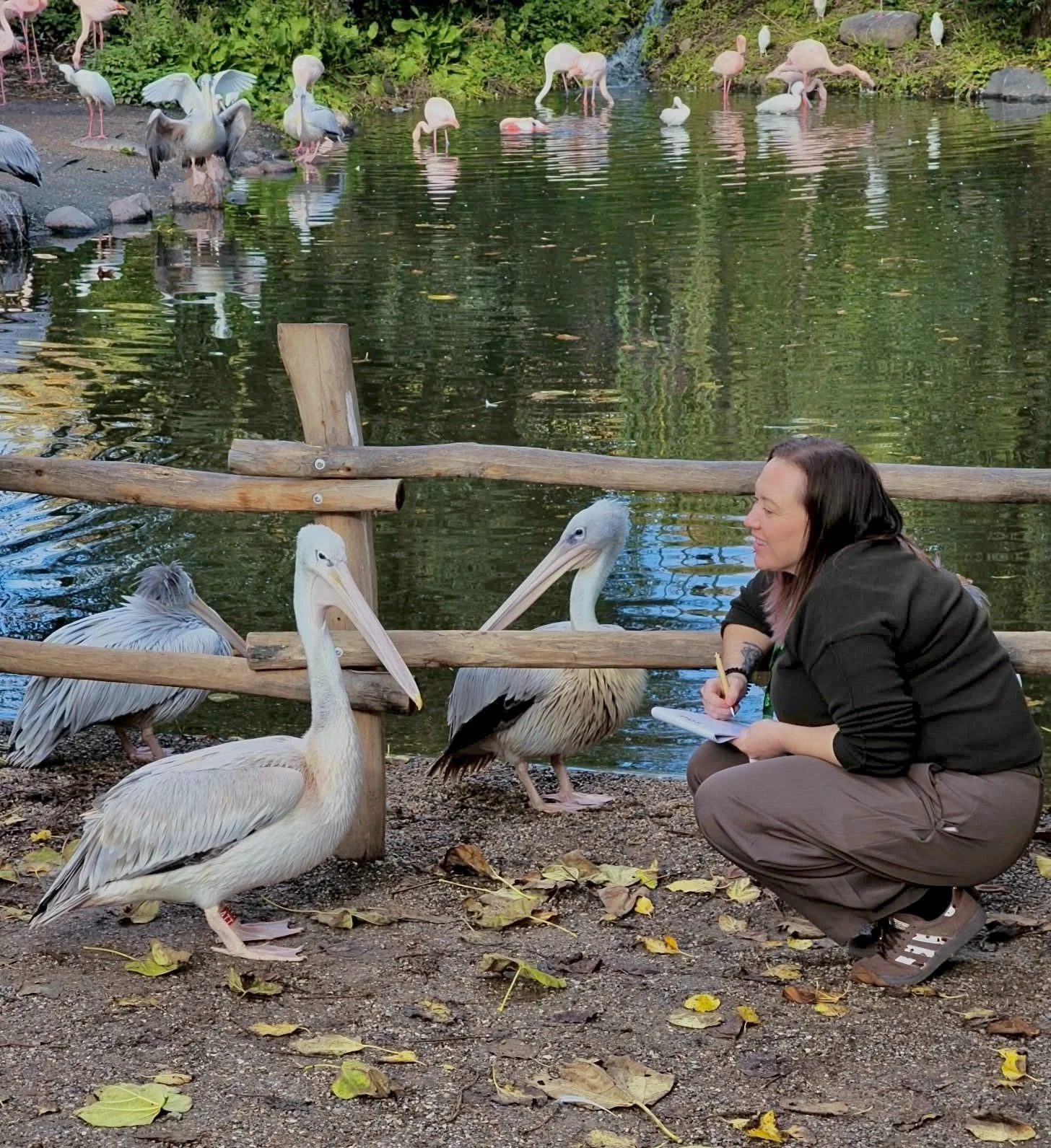
Staff undertaking direct observations also reported noticing behaviours or situations they would otherwise have missed, giving practical context to the discussion about allocating observation time.
A score needs to be traceable to the observations behind it, with missing information made clear. For example, recording that an enrichment activity was provided tells us what was offered. Understanding its welfare effect requires further information about the animal, including its response.
Nina Lambæk Nielsen’s rhino project examined how time since a move to a new zoo related to animals’ use of space and social behaviour. The work raised questions about how we interpret behaviour as an animal becomes established in a new group.
The project also had practical relevance for habitat review: examining which areas each animal uses regularly, what might explain limited use, and whether changes to the environment or care routines are worth testing. Knowing what is usual for an individual helps us recognise change. We still need to ask whether that familiar pattern represents good welfare.
Making research usable in everyday care
Jason Wark’s ZooMonitor and data-literacy session included Annie, a pygmy hippo at Lincoln Park Zoo. Behavioural and spatial records showed that she predominantly used one part of her habitat. Following the introduction of automated feeders in different locations, monitoring recorded more feeding and foraging and broader use of the space.
Jason also followed the information beyond collection: who analyses it, how findings reach colleagues and where they enter care decisions. He emphasised involving managers early and starting with focused questions before expanding a monitoring programme.
Nikolaj Nielsen introduced Thrive5, a prototype app intended to record repeated welfare assessments of individual animals and display the results over time. He wanted it tested in the conditions keepers actually face: rain, unreliable Wi-Fi and an already full workload. Those conditions belong in evaluating any tool intended for everyday care.
Kirstin emphasised the exchange between research and everyday care: bringing practice into science, alongside bringing science into practice, which captured an important part of the workshop’s philosophy. Questions arising in care teams’ work deserve investigation, and findings need a route back into their decisions.
Alice Doyle’s publishing session extended that exchange beyond the workshop. She discussed choosing an outlet the intended readers can access, as well as formats such as short reports and industry summaries. Her explanation of submission, feedback and revision gave practitioners a clearer view of how to take their work towards publication. Sharing practical research gives others the opportunity to question it, learn from it and consider its relevance to their own setting.
Supporting the people who provide care
Sabrina’s One Care session brought the wellbeing of the people doing the caring into focus. Their wellbeing matters in its own right. Working relationships, opportunities to develop and organisational support also deserve attention when we ask how care can be sustained.
The care described in a policy has to be made possible through time, skills, resources and decisions across an organisation. Sabrina’s systems perspective examined how departments work towards a shared purpose, and how, in good practice, care teams’ knowledge informs decisions about staffing, budgets and facilities. That requires communication in both directions. Making good care possible is part of the welfare work.
These connections were what I valued most: practical knowledge, scientific enquiry and the conditions that make good care possible. Bringing practice into science and science into practice sits at the heart of Welfare in Practice.
There was care in the approach to learning too: encouragement to practise, slow down, ask questions and make the next step manageable.
The closing group exercise asked participants to bring research, observations, people and resources together in an outline of an animal-care, welfare and research programme. From that wider picture, each person chose one next step. Sabrina also asked what might need to be deferred or declined to make that commitment achievable.
The hosts also announced plans to donate part of the workshop proceeds to support orangutans and the people caring for them, in light of the recent forest fires in Sumatra and Borneo.
Thank you to Sabrina and Kirstin, the speakers and fellow participants for sharing their work, questions and perspectives. Sabrina, a particular thank you for connecting what care teams know with what people need to work well together.
For me, the giraffe in the rain brings these discussions back to the life the animal actually gets to live.
Related reading and practical resources
These publications and resources offer further background on the article’s themes. The list includes related research and tools beyond the projects presented at the workshop.
Behaviour, social relationships and space use
Qualitative Behaviour Assessment across species
Czycholl, Skovlund and Forkman (2026). A review of fixed-list QBA, examining its applications and differences in observation methods, observer training and reporting.Observing harbour porpoise social behaviour
Smith et al. (2026). Drone observations of sexual interactions and group sizes around Shetland provide further context for studying this species’ social behaviour.Assessing agreement between observers
Koo and Li (2016). A more technical guide to selecting and interpreting intraclass correlation coefficients, used to examine consistency in repeated observations and ratings.Social preferences in southern white rhinos
Williams et al. (2023). Research on individual social bonds and behavioural patterns in a multigenerational female herd, providing context for decisions about social groupings.Interpreting how animals use their space
Brereton and Fernandez (2022). A comparison of measures for examining overall enclosure use and the use of particular areas or resources, explaining why the measure needs to fit the question.
Welfare assessment, data and wellbeing
Designing welfare assessment tools for everyday use
Jones et al. (2022). A review of the choices behind zoo welfare assessment tools, including scoring, weighting, reliability, validity and individual context.Developing and testing welfare assessment in practice
Gandia et al. (2024). An account of how RZSS and university researchers developed and examined welfare assessment processes, connecting research, practical application and behavioural evidence.Turning behavioural records into useful reports
Wark (2022). Examples of dashboards for summarising behaviour over time and evaluating enrichment, extending the discussion about making collected information useful.Self-care and wellbeing in zoo and aquarium professionals
Brando et al. (2025). Research examining self-care, life satisfaction, job satisfaction and self-efficacy. This draws on the same wider dataset as the 2026 systems paper discussed in the article.
Practical resources
Welfare assessment and behavioural monitoring resources
University of Stirling and RZSS. Resources for welfare assessment, behavioural recording and examining how animals use their environments, including the Standardised Welfare Assessment Tool and Behaviour and Environment Evidence Base.Developing welfare assessment protocols with DAZA
University of Copenhagen. An overview of the project developing and testing welfare assessment protocols for Danish zoos and aquaria in collaboration with DAZA.Publishing practical research: author guidelines
Journal of Zoo and Aquarium Research. Guidance on publication formats and submission requirements for readers considering how to share their research or evaluated changes to care.
About the author
Nikki Morrison is an Animal Welfare, Behaviour & Implementation Specialist and founder of Nikki Morrison | Welfare in Practice. She brings 25 years of cross-sector experience across animal care, behaviour, welfare and operational leadership, and is currently studying BSc (Hons) Animal Welfare Science at SRUC.